Billing hub
How we removed fragmented manual work and centralized billing intelligence into one platform.
Overview
The billing team worked in a manual and fragmented way, relying on multiple spreadsheets and external tools to reconcile invoices and data. The process was slow, error-prone, and hard to audit. This project created a centralized internal feature to manage the full billing cycle, from registration to settlement, with maximum reliability.
My role
Discovery leadership, UX research, and interface design.
Challenge
Centralize a scattered data ecosystem into one internal feature with maximum reliability and real-time operational visibility.
Impact
Manual processes
With the Billing hub platform in place, manual-process effort dropped by 63%, replacing fragmented checks across tools with one centralized workflow.
Data reliability
Elimination of human-error risk from manual spreadsheet operations.
Operational visibility
Real-time visibility into payment status and insurer submissions in one place.
Process
- 01
Shadowing and ethnography
To understand the real pain points, we ran shadowing sessions with the billing team over several days. We observed each click, spreadsheet, and tool, mapping the full as-is journey and its friction points.
- 02
Ecosystem mapping
We identified that the solution was not just a new screen, but flow integration. We worked closely with engineering during discovery to understand how insurer data and invoices could be consolidated via API in the back office.
- 03
Design for high-density workflows
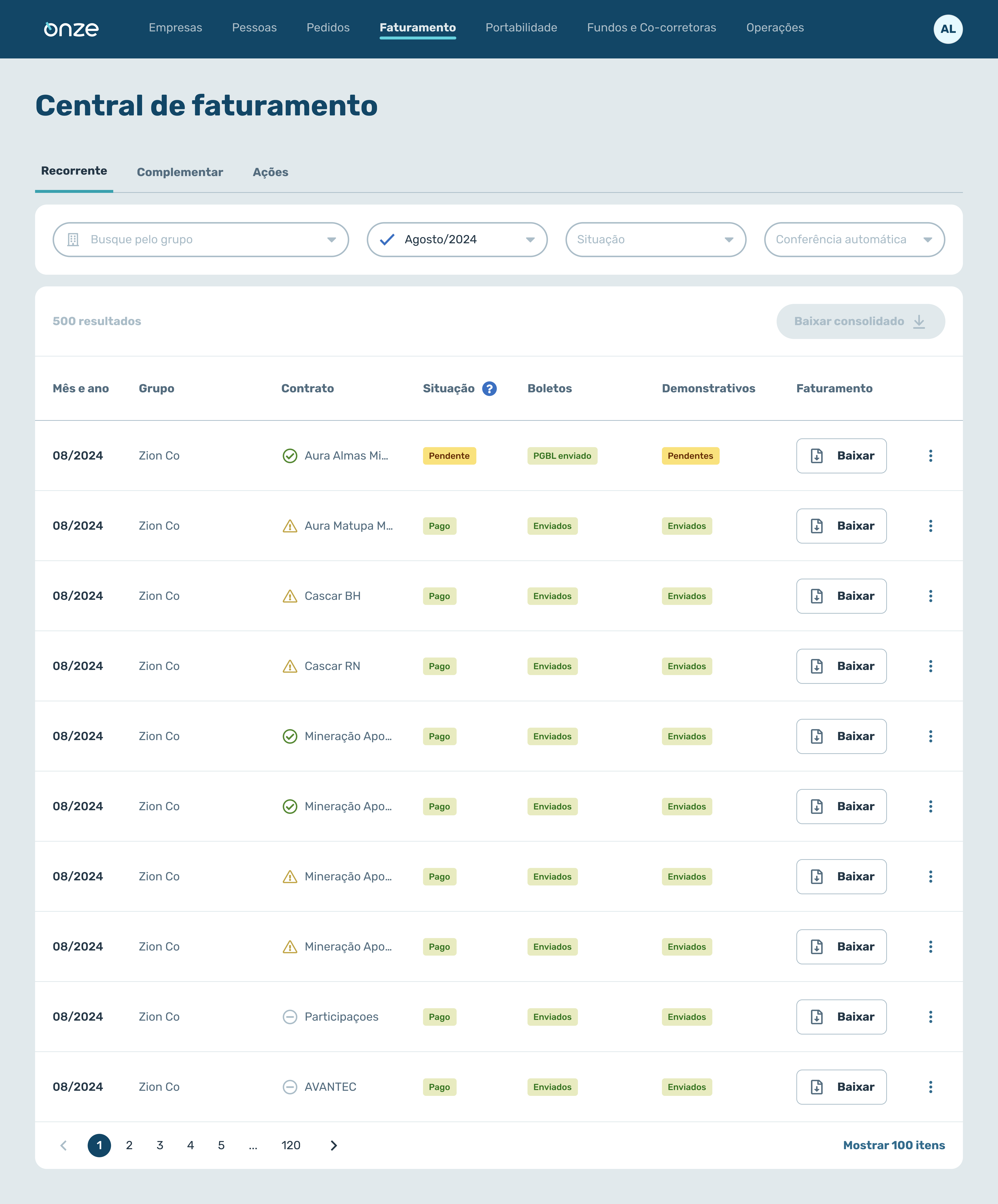
Unlike customer-facing apps, this was about productivity. We designed tables and dashboards for scanability, helping the team manage large data volumes without losing clarity.
Gallery
Main dashboard
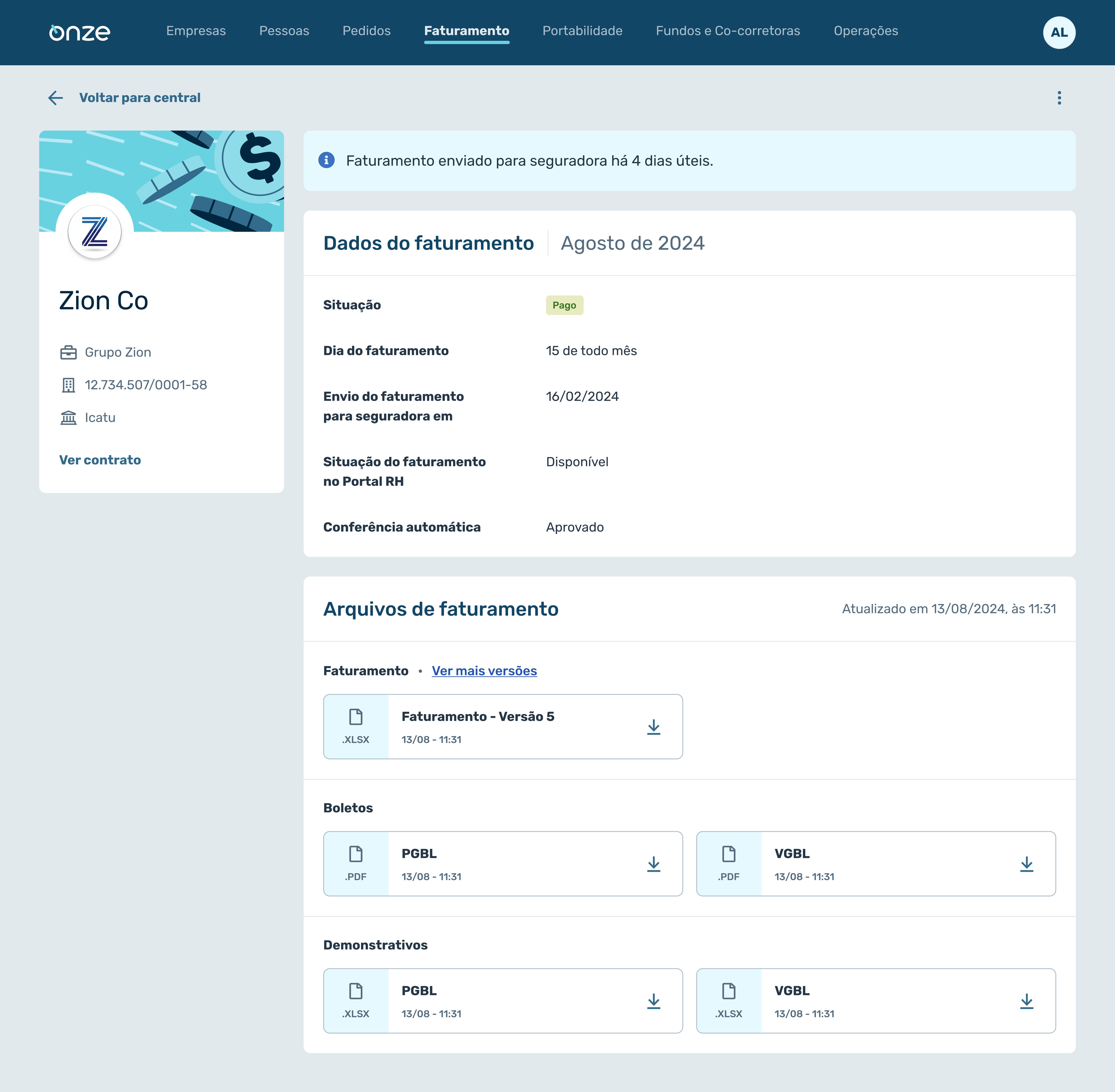
Contract details
Mobile version

Solution
- Full-cycle management: Invoice registration and visualization with real-time payment status tracking, eliminating the need to switch across systems.
- Synchronization with insurers: Tracking insurer-bound billing submissions directly inside the platform, with full traceability for each operation.
- Report automation: One-click download of consolidated billing reports, replacing hours of manual consolidation across separate spreadsheets.
- Auditabilidade: Action trails in the interface make it easy to identify who changed what and when, which is essential for financial security.
Key learnings
The value of shadowing
Without shadowing the team in person, we would not have understood that the biggest pain point was constant context switching between tools, not just data entry. Ethnographic research revealed the real problem.
Efficiency over aesthetics
In internal tools, interface quality is measured by usefulness. Success was measured by minutes saved per task and clarity of critical data, not visual appeal.
Internal scalability
The solution was designed to be modular, allowing new billing types or insurers to be integrated in the future without requiring a complete redesign.